


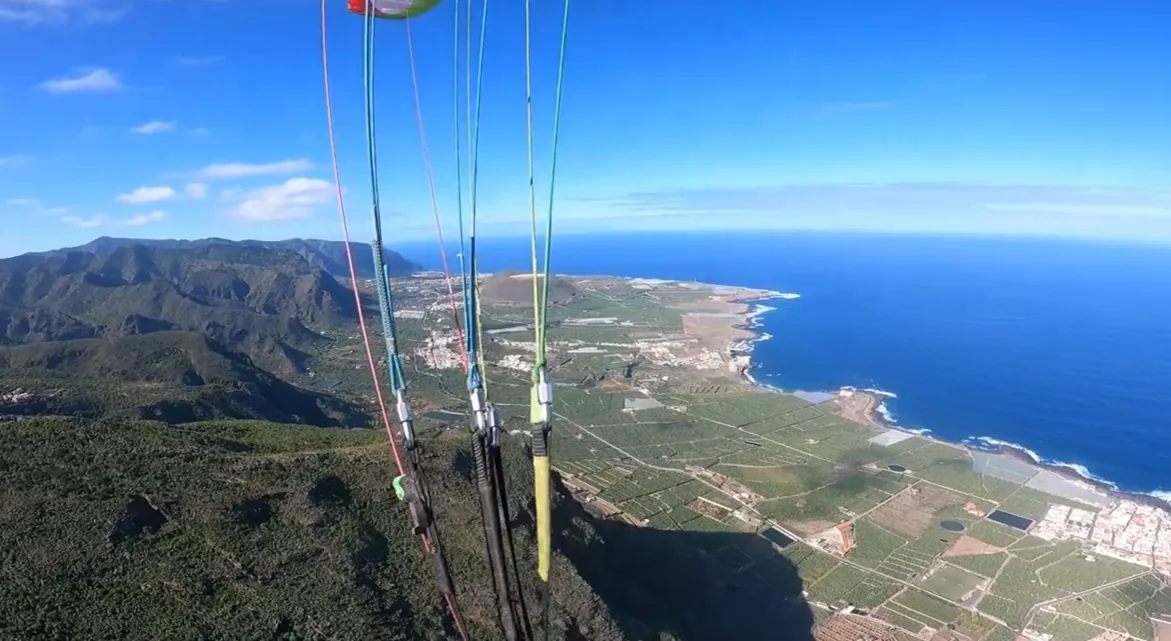
Every winter, thousands of Northern European pilots look south for sun and flyable conditions. Tenerife is the most common answer — and it is an understandable one. The Canary Islands sit at 28 degrees north latitude, close enough to the African coast to enjoy warm, reliably dry winters. But paragliding in Tenerife is a more specific experience than the marketing suggests. This guide explains what each of the main Canary Islands actually offers for paragliding, what the trade wind does to flying conditions, and how the archipelago compares with Portugal's Atlantic coast for a serious pilot week.
The Canary Islands for Paragliding — Which Island for Which Pilot?
The seven main islands have very different flying characters. Pilots who research the Canaries as a single destination often arrive expecting one experience and find another. The island you choose determines almost everything about your flying week.
- Tenerife — The largest island and the most visited. Dominated by the volcanic cone of Teide at 3,715 metres. Good coastal soaring on the north coast; thermal flying in the south; several tandem operators. The right island for coastal soaring and a sun holiday alongside flying.
- Gran Canaria — The best island for XC flying in the archipelago. The Agaete valley in the northwest generates reliable thermals through the year and has produced some impressive XC distances. Less tourist infrastructure than Tenerife but a more serious flying environment.
- Lanzarote — Volcanic, flat-topped, constantly windy. Ridge soaring is possible at the Famara cliffs but the trade wind is strong and inconsistent. More interesting for kite and wind sports than for paragliding.
- Fuerteventura — The windiest island in the archipelago. Primarily a kite-surfing and wind-sports destination. Paragliding is secondary and conditions are often too strong for comfortable flying.
- La Palma, La Gomera, El Hierro — Smaller, more remote islands with specific local communities. Less developed as visitor flying destinations.
Tenerife — What the Flying Actually Looks Like
Most pilots who book a Tenerife paragliding trip end up in the south of the island — Las Am²ricas, Los Cristianos, or El Médano. The south coast is drier and sunnier than the north, protected by Teide from the trade wind clouds that frequently cap the northern slopes. Flying from the southern ridges in the afternoon trade wind is possible, but the wind comes in strong and gusty and can be difficult for pilots not used to it.
The north coast — particularly around the Anaga peninsula — offers more reliable coastal soaring in the light trade wind, but access requires driving across the island and conditions are more variable.
The honest assessment of Tenerife flying is that much of what is marketed to tourists is tandem operations. The organised tandem flights from La Caleta or Adeje are professional and the view over the southern coast is genuinely spectacular. But solo pilot coaching weeks are rare, group sizes at the few flying schools are large, and the infrastructure for an intermediate pilot wanting to improve is thin compared to dedicated coaching destinations.
The Trade Wind — Flying Conditions in Detail
The Canary Islands trade wind blows from the northeast almost year-round. In winter it is moderate — typically 15 to 25 km/h at coastal sites — and fairly consistent. In summer it strengthens and becomes less reliable. The wind creates a reliable soaring environment on north-facing ridges but also produces turbulence in the lee of the volcanic topography.
The temperature inversion that the trade wind creates is one of the key meteorological features of the islands. Cloud builds over the northern slopes of the larger islands but the south sits below the inversion layer in clear, warm air. This makes the south good for tandem and recreational flying but limits cloudbase on thermal days — typically 600 to 900 metres above sea level in winter, which constrains XC potential significantly.
The temperature inversion layer that gives the Canaries their reliable southern sunshine also caps thermal development. On most winter days in the south, thermals top out at 600–1,000 m above terrain. This is excellent for smooth recreational and tandem flying but means XC distances are typically limited to 20–40 km on standard days. Gran Canaria's terrain can punch through the inversion on certain days — but this is the exception rather than the rule.
Gran Canaria — The Best XC Option in the Archipelago
For pilots specifically interested in XC flying, Gran Canaria is the correct island. The Agaete valley on the northwest coast funnels air from the trade wind in a way that generates consistent, punchy thermals in the late morning and early afternoon. The terrain is dramatic — deep ravines called barrancos cut through the interior, creating complex but interesting XC routing.
The Agaete flying community is small but genuine. Several experienced local pilots are willing to fly with visitors, and the site has produced some impressive XC distances — 80+ km on exceptional days. The island is smaller than Tenerife so XC routing requires airspace awareness around Las Palmas airport's CTR. But for pilots who want XC flying rather than tandem tourism, Gran Canaria is substantially more rewarding than Tenerife.
Canary Islands vs Portugal's Winter Atlantic Coast
| Factor | Canary Islands | Sesimbra, Portugal |
|---|---|---|
| Winter temperature | 22–26—C (sunny south) | 14–18—C (Atlantic coast) |
| Thermal cloudbase (winter) | 600–1,000 m (inversion limited) | 1,200–2,000 m on XC days |
| XC potential | 20–50 km typical (Tenerife), 80 km (Gran Canaria) | 60–150+ km (Alentejo) |
| Coaching model | School or self-guided; radio coaching rare | Small group, personal radio coaching |
| Flight from UK/Germany | 4–4.5 hours | 2.5–3 hours to Lisbon |
| Season | Year-round (best Oct–Apr) | Year-round (all months flyable) |
| Coastal soaring | Yes (north coast ridges) | Yes (Atlantic cliffs, nortada) |
Portugal's Winter Atlantic Flying — What the Canaries Cannot Offer
Portugal in winter is cooler than the Canary Islands — Atlantic coast temperatures in December through February run 14 to 18 degrees Celsius. But the flying quality is consistently underrated. The coastal soaring at Sesimbra runs on the northerly Atlantic swell wind and is available on a higher proportion of winter days than the Canary Islands trade wind allows for proper thermal flying. On good Alentejo XC days in winter, cloudbase reaches 1,500 to 2,000 metres — significantly higher than the typical Canaries inversion cap.
The most important difference for intermediate pilots seeking coaching is the personal model. In Portugal, Behrooz works with groups of no more than 5 pilots on XC days and 8 on coastal days. Radio coaching in the air is standard. Every evening includes a track log debrief. The Canaries have no equivalent infrastructure for this kind of personalised instruction at comparable scale.
Who the Canaries Suit Best
The Canary Islands make most sense for pilots who primarily want winter sun and view the flying as the main activity but not the sole reason for the trip. Tandem flights and recreational soaring in Tenerife's warm winter air are genuinely pleasant. If you are travelling with a non-pilot partner who will not fly, Tenerife offers excellent beaches and resort infrastructure that Sesimbra does not match in winter. Gran Canaria makes sense for the XC-focused pilot who specifically wants an alternative to the Iberian mainland and is willing to do more self-organised flying.
For pilots whose primary goal is to improve — to return home after a week flying noticeably better, with more XC confidence and cleaner technique — Portugal is the correct choice. The coaching environment is purpose-built for exactly that outcome.
Questions about a winter flying week in Sesimbra? Message Behrooz directly — he will tell you honestly whether the timing suits your goals.