


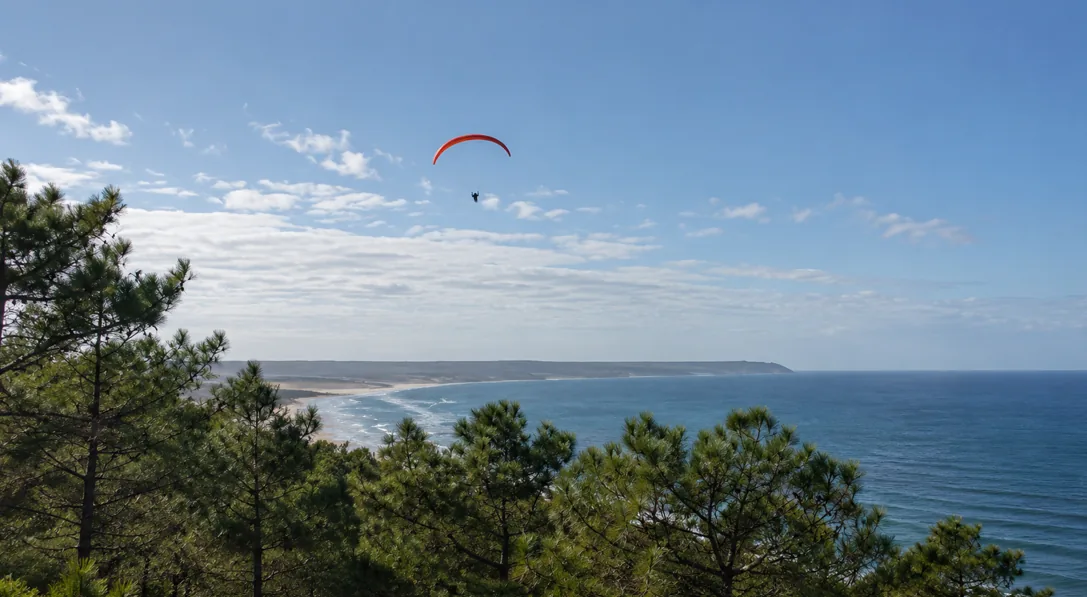
Every pilot who flies in Germany, the Netherlands, the UK, Belgium, Scandinavia or Austria knows the feeling. By late October the weather closes in. Low pressure systems queue up across the Atlantic. Flying days become rare, then precious, then effectively gone until March. Between four and six months of the year, your wing sits packed in its bag. The pilots who keep flying through winter are the ones who figured out where to go — and there are genuinely good options within easy reach of Europe.
The European Pilot's Winter Problem
Northern and central European pilots lose a significant slice of the flying year to weather. UK pilots flying coastal and hill sites typically have a usable season running from April through September — six months at best, and often less if the summer is wet. German and Dutch pilots in flatland or low-ridge sites face similar calendars: the autumn low-pressure season arrives early, thermal activity collapses, and short days mean that even clear days often don't produce enough solar heating to generate usable lift before early afternoon.
The mathematics are unforgiving. A pilot flying 40 days a year in the UK or 50 days in Germany is doing well relative to their peers. Pilots at Atlantic or Mediterranean locations with year-round flying can accumulate that in three months. Airtime is the currency of improvement in paragliding — wing feel, weather reading, site judgment, and the instinctive responses that separate confident pilots from anxious ones all build through repetition in the air. A winter trip doesn't just fill the gap. It returns you to spring with 30 or 40 hours of fresh airtime instead of the rustiness that accumulates through four months of enforced inactivity.
The good news is that the European winter flying map is better than many pilots realise. You don't need to fly to Brazil or South Africa to find reliable winter conditions. The destinations below are all within three hours of most European capitals by air, and several are within two. The question isn't whether to go — it's which one matches your flying level, budget, and what you want to do with the week.
1. Canary Islands — The Warmest Option (Gran Canaria, Tenerife, Lanzarote)
The Canary Islands are the most temperature-reliable winter option in reach of Europe. They sit far enough south — roughly level with southern Morocco — to guarantee 20—C or above even in January, and the NE trade winds that define the islands' climate provide the kind of consistent, organised airflow that paragliders need. These aren't the variable, frontal winds of northern Europe. They're predictable, directional, and they blow almost every day.
Gran Canaria is the most technically interesting island for paragliding. The Agaete valley on the northwest coast concentrates the trade flow and produces reliable ridge soaring and, on stronger days, cross-island XC potential. The terrain is dramatic — volcanic ridges dropping straight to the Atlantic — and the variety of launch options means most wind directions offer something flyable. Tenerife offers extensive north-coast trade wind ridge flying, with Teide providing a spectacular backdrop and more sheltered flying conditions on the southern coast when the north is too strong. Lanzarote, the flattest island, is primarily a ridge and dune soaring destination — the volcanic landscape along the west coast provides surprisingly effective soaring in steady trades, and the flying is accessible for pilots at most experience levels.
As Spanish territory, the Canaries are fully within the EU. Your DHV, BHPA, or FFVL insurance is valid without extension. Direct flights from virtually every European capital run year-round with budget carriers, and winter prices — both flights and accommodation — are considerably lower than the peak European summer season. The main drawback is crowds: the Canaries are the most well-known winter flying destination in Europe, and you will encounter other pilots, particularly German and British. That said, the island geography disperses pilots effectively, and the crowd problem is manageable. Best months: November through March.
2. Sesimbra, Portugal — Atlantic Ridge All Winter
Sesimbra sits 40 kilometres south of Lisbon on a section of the Portuguese coast where a continuous limestone ridge runs parallel to the sea, north to south, exposed to the dominant NW and N Atlantic winds. Those winds blow frequently and persistently — particularly in winter, when the pressure gradient between Atlantic systems and the Iberian anticyclone produces long sequences of clean ridge soaring days.
The key difference between Sesimbra and most other winter destinations is the microclimate. The Arrábida Natural Park ridgeline shelters the town from the prevailing wind at street level, producing a sunnier, calmer local climate than the rest of the Setúbal Peninsula. While Lisbon can be grey and wet, Sesimbra often has clear skies and mild coastal air. Temperatures sit between 12 and 16—C through December and January — cold enough that you'll want a decent base layer, but comfortably flyable in the afternoon sun. By February, days start to lengthen noticeably and occasional thermal activity begins to add interest above the pure ridge.
The off-season character of Sesimbra in winter is one of its most attractive features. The town is quiet. Accommodation prices drop significantly — the same apartment that costs €120 per night in August may cost €45 in January. The restaurants that fill with summer tourists are now available without a reservation, and the quality of the food is unchanged. Lisbon is 30 minutes away by motorway for city days. And the flying, crucially, is often better than summer — cleaner, more consistent airflow without the convective instability that can complicate summer coastal flying.
Behrooz runs guided flying programmes at Sesimbra year-round, including dedicated winter coastal weeks. For more on what winter in Portugal specifically looks like from a flying perspective — conditions, daily rhythm, what to bring — read the dedicated winter paragliding Portugal guide. To see the programme structure for a week in Sesimbra, visit the Coastal Soaring Week page.
3. Madeira — 330 Flyable Days
Madeira is one of those places that pilots who have been there almost never stop talking about. The island claims 330-plus flyable days per year — a figure that, accounting for the island's complex terrain and localised microclimates, is broadly accurate. What makes Madeira extraordinary is the combination of sub-tropical climate, dramatic volcanic topography, and an ocean location that keeps temperatures stable and air pressure predictable in a way that more continental destinations cannot match.
The west side of the island is the primary flying zone. The Madalena do Mar area, the Funchal coastal ridges, and the spectacular Cabo Girão — one of the highest sea cliffs in Europe — provide both ridge soaring in the regular NE trades and thermic flying on calm days when the volcanic slopes heat up. The island's topography is steep enough that launches often lift you above dramatic coastal cliffs within minutes of leaving the ground. Winter temperatures run between 18 and 22—C, which means flying in a light fleece rather than the full winter suit needed in the Alps or even on the Portuguese mainland.
Flights from Lisbon with TAP run multiple times daily and take around 90 minutes. Direct flights from London, Amsterdam, Frankfurt and other European cities are available year-round. Accommodation ranges from budget quintas to mid-range hotels, and winter prices are lower than the summer tourism peak. For a full breakdown of flying in Madeira, read the dedicated paragliding in Madeira guide.
4. Algarve, Portugal — Southernmost Mainland Option
The Algarve is the southernmost point of mainland Europe, and that geography matters in winter. Average January temperatures sit 2–4—C above those of Sesimbra and Lisbon, making it the mildest mainland flying destination on the continent. The landscape is defined by the famous falésias — dramatic ochre limestone sea cliffs that rise 20 to 60 metres above the Atlantic, extending for kilometres along the western and southern coastline.
The spring and autumn windows are the Algarve's strongest flying seasons: thermic activity develops reliably in March and April, and September brings the same conditions in reverse. Winter is more variable — there are good coastal soaring windows, particularly on the exposed western Costa Vicentina, which catches the NW Atlantic swell and wind — but the thermal activity that defines summer flying is absent. For ridge and coastal soaring, the Algarve delivers. For XC, wait for March at the earliest.
Faro Airport has direct connections from virtually every European country, including extensive low-cost routes from the UK, Germany, the Netherlands and Scandinavia. This makes the Algarve one of the most accessible Portuguese flying destinations for northern European pilots. For a detailed look at Algarve flying, see the paragliding in the Algarve guide.
5. Morocco — Atlas Mountains in Reach
Morocco sits only 14 kilometres from mainland Europe across the Strait of Gibraltar, and the flying options it offers are genuinely different from anything available in the European Atlantic corridor. The Tarifa–Tetouan corridor on the southern shore of the Strait is the most accessible zone — the same terrain geography that makes Tarifa the wind capital of Europe continues south into Morocco's Rif Mountains, where coastal ridge flying and cross-strait conditions occasionally allow pilots to complete Europe–Africa flights in either direction.
Further south, the High Atlas Mountains offer a completely different flying environment. Ouarzazate on the southern side of the Atlas sits at 1,100 metres above sea level in semi-desert terrain, and the desert thermals that develop from February onwards are among the most powerful and organised in the reach of Europe. XC distances that are impossible to achieve in European winter conditions become accessible here, with long valley corridors and predictable afternoon thermal cycles. March is the overlap month where winter pilots and early XC pilots share the same skies.
Logistics require slightly more planning than Portugal or the Canaries. Non-EU pilots will need to verify their insurance coverage specifically includes Morocco — many DHV and BHPA policies do, but check explicitly. Accommodation and food costs in Morocco are among the lowest of any destination on this list, which makes it attractive for budget-conscious pilots willing to invest the additional travel time. Best months for flying: February and March, with February offering the best balance of mild weather and usable conditions.
6. Swiss/French Alps — Cold but Beautiful on High-Pressure Days
The Alps deserve an honest mention here, not as a primary winter flying destination, but as a reminder that winter conditions in the mountains are not uniformly closed. High-pressure anticyclones do settle over central Europe in winter, and when they do, the Alps can produce days of extraordinary clarity and calm that are visually among the most spectacular in the sport. Planpraz above Chamonix, Wengen in the Bernese Oberland, and various sites in the Rhône corridor can be flyable in genuine winter conditions.
The caveats are significant, however. Alpine winter temperatures at launch altitude regularly reach -10 to -15—C, requiring thermal protection that most summer-oriented pilot kits don't provide. Flying windows are short — sometimes no more than two or three hours in the middle of the day. Avalanche risk creates restricted access to certain approach routes. And the consequences of off-field landings in winter terrain are considerably more serious than summer equivalents.
For most pilots planning a winter flying trip, the Alps in January are not the answer. Include them as a possibility if you're already living nearby and a high-pressure window opens — but don't build a winter flying holiday around them. The Atlantic destinations exist precisely because they offer reliable flying rather than rare opportunities in demanding conditions.
Winter Destination Comparison
| Destination | Temp (Winter) | Flying Type | Best Months | Cost Level | Crowds | Flights from Europe |
|---|---|---|---|---|---|---|
| Canary Islands | 20–24—C | Ridge, trade wind, dune | Nov–Mar | Low–Mid | Moderate | Direct from all capitals |
| Sesimbra, Portugal | 12–16—C | Coastal ridge, Atlantic | Nov–Feb | Low | Very quiet | Via Lisbon (direct from most) |
| Madeira | 18–22—C | Ridge, thermal, coastal | All year | Low–Mid | Low | Direct from many cities |
| Algarve, Portugal | 14–18—C | Coastal ridge, cliff | Nov–Mar | Low | Low | Direct to Faro from most |
| Morocco | 12–20—C (varies) | Ridge, XC thermal, desert | Feb–Mar | Very low | Very low | Direct from many cities |
| Alps (winter HP) | -15 to -2—C | Mountain ridge, thermal | Jan–Feb (rare) | High | Very low | Many options nearby |
When to Book and What to Expect
Winter flying trips operate on a different planning rhythm than summer trips. In the Canaries or Portugal, booking six to eight weeks out rather than months in advance is often a better strategy — winter weather windows are inherently more variable than summer patterns, and understanding the seasonal forecast picture before you book can save frustration. That said, popular guided programmes and good-value accommodation does fill up over the Christmas and New Year periods, so December weeks specifically benefit from earlier planning.
What to pack for a winter Atlantic flying trip differs from summer. For Sesimbra or the Algarve in December or January, bring:
- A warm base layer for early morning and evening — temperatures feel colder with the Atlantic breeze
- A mid-layer or light down jacket for pre-launch waiting and post-flight walks back from the ridge
- Your standard flying suit is adequate for the actual flying — air temperature at coastal launch height in January is typically 10–13—C
- Waterproof overshell — rain days are part of winter anywhere in Portugal, though fewer than you'd expect
- Gloves rated to about -5—C — more than you'll need at sea level, but useful if you gain significant height on a thermal day
For the Canaries, this all scales back considerably — a light fleece and your normal flying suit will cover most days. For Morocco in February, temperature management across the dramatic altitude range (from 300m to 3000m+ terrain) requires more thought, particularly for High Atlas flying.
On insurance: DHV, BHPA, and FFVL policies generally cover EU territories (including the Canaries and Madeira as Spanish and Portuguese regions respectively), Portugal mainland, and Morocco under third-party liability provisions — but verify your specific policy document before travelling. Some policies require a specific add-on for non-EU territories. Tandem passengers are typically covered under the pilot's operator liability, not personal sport insurance.
Why Pilots Who Fly Through Winter Improve Faster
The data on pilot development is consistent across schools and coaches: the gap between a pilot who flies year-round and one who takes a four-month winter break widens faster than most people expect. It isn't only about airtime accumulation, though that matters significantly. It's about the specific conditions that winter flying provides.
Coastal ridge soaring in Atlantic conditions is one of the most effective environments for building the kind of instinctive wing-feel that separates genuinely confident pilots from technically competent but hesitant ones. The lift is consistent, the airflow is organised, the consequences of a mistake are low — but the wind is real, the conditions vary, and you spend long periods in the air working the edge of the ridge, reading the shape of the lift band, feeling the wing respond to small pressure changes. Two hours of good ridge soaring in Atlantic conditions teaches you more about your wing than five hours of boating around in calm air waiting for the next thermal.
Pilots who visit Sesimbra in winter come back in spring with something that is difficult to describe but immediately apparent: they are current in a way that pilots returning from a four-month break simply aren't. Their hands are light on the brakes. They read the ridge. They're not spending the first week re-learning what a collapse feels like before it becomes a collapse.
Some of the most rapid improvements I've seen among visiting pilots have happened on winter weeks — fewer distractions, quieter launches, longer time in the air each day, and the particular quality of attention that comes when there are no crowds and no pressure to chase a specific goal. The pilot who comes to Sesimbra in January with 80 hours and leaves a week later with 95 has gained something more than 15 additional hours. They've gained 15 hours in conditions that demanded genuine concentration and rewarded it with better feel.
If you've been thinking about a winter flying trip and holding off because it feels like something competitive pilots do rather than recreational ones — this is the moment to reconsider. The destinations are accessible, the costs are low in off-season, and the flying is genuinely good. Your spring season will be better for it.