


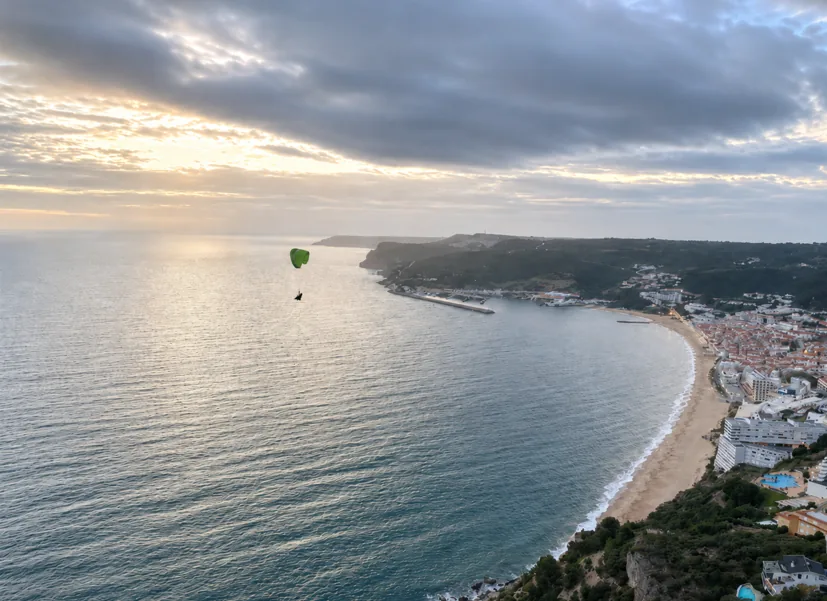
Both involve a rectangular fabric wing, a harness, and the sky above you. Beyond those three things, paragliding and paramotoring are fundamentally different sports with different costs, different training requirements, different flying freedoms, and — critically — a completely different experience in the air. If you're trying to decide which direction to go, or simply trying to understand the difference, this is the honest comparison you need.
The Fundamental Difference
Paragliding is free flight. The pilot uses natural sources of lift — rising air columns called thermals, wind deflected upward by ridges and cliffs, or wave lift generated by mountains — to stay airborne. There is no engine. The wing is the aircraft, and the pilot's skill lies entirely in reading the air, navigating the sky, and working with the environment that's there on the day.
Paramotoring — or powered paragliding (PPG) — attaches a petrol or electric engine unit to the pilot's back. A propeller cage provides thrust, allowing the pilot to take off from flat ground in calm conditions without any natural lift at all. The motor provides altitude and sustains flight; it can be throttled back to glide but cannot generate the same lift efficiency as a free-flying paraglider using thermals.
This core difference drives almost every other comparison between the two sports.
Cost — The Real Numbers
Both sports require a similar wing — in fact, many PPG pilots use a slightly modified paraglider wing adapted for the thrust forces of a motor. The cost gap comes from the engine unit itself.
| Item | Paragliding | Paramotoring |
|---|---|---|
| Wing | $2,500–4,500 (EN-A or B) | $2,000–4,000 (PPG-rated) |
| Harness | $500–1,000 | Included in motor unit |
| Reserve parachute | $500–1,300 | $500–1,300 |
| Helmet + instruments | $200–500 | $200–500 |
| Motor unit (paramotor) | N/A | $8,000–10,000 |
| Total starter setup | ~$7,500 | ~$13,000 |
Ongoing costs also differ. A paraglider has almost no running costs — the wing needs annual inspection and porosity testing, and reserve parachutes require repacking every two to four years. A paramotor engine needs regular servicing, spark plugs, gearbox oil, fuel, and periodic propeller checks. Engine maintenance is a real ongoing commitment that free-flight pilots simply don't have.
Training Comparison
Both disciplines begin with identical ground skills. Whether you're learning to paraglide or to fly a paramotor, the first hours of training are spent on a gentle slope with the wing above your head, learning to inflate it, read its feedback, and control it in zero-wind and light-wind conditions. This is called ground handling, and it's the foundation of both sports.
After ground school, the training paths diverge:
- Paragliding follows a structured certification framework (EP / Elementary Pilot in Portugal, PPG in the UK, P1/P2 in many systems). The full course to solo-qualified pilot typically takes 8–14 days of instruction spread over several weeks, plus ongoing supervised hours. Reading weather and thermal conditions forms a significant part of the curriculum.
- Paramotoring also involves a PPG-specific licence — roughly 10 days of intensive training including the ground handling phases. The key difference is that the paramotor student does not need to learn to read thermals or site conditions in the same depth. The engine provides takeoff on demand; weather reading is simplified to basic wind awareness.
Neither sport has a shorter path to competence — but paramotoring has a lower weather-knowledge ceiling to reach before first solo flight.
Where and When You Can Fly
This is the biggest practical difference between the two disciplines, and the one that most shapes people's day-to-day flying life.
Paragliding requires natural lift. At coastal sites like Sesimbra, the Atlantic sea breeze provides reliable ridge lift — but the wind has to be in the right direction and strength. Inland thermic flying requires the right time of day (late morning to mid-afternoon) and the right synoptic conditions. You cannot turn up on a dead-calm morning and simply go flying. You plan around the weather, and some days the weather wins.
Paramotoring is dramatically more flexible. A calm morning with no wind — the worst possible conditions for a free-flying paraglider — is often ideal for a paramotor pilot. The still air provides a smooth, manageable flight environment while the motor provides all the energy needed to stay airborne. Many paramotor pilots fly at dawn and dusk specifically to exploit these calm windows.
Both paragliding and paramotoring operate under the same national airspace regulations. In Portugal and across most of Europe, both require staying below controlled airspace (typically 700–1,000 ft above ground near airports), avoiding restricted zones, and filing notification for some flight types. Paramotors with radio transponders can access slightly different airspace in some jurisdictions. Check the specific rules for your country with the national aviation authority.
The Experience in the Air
Ask any pilot who has flown both, and this is where the conversation becomes most personal. The sensation of the two sports is profoundly different.
Paragliding is silent. Once airborne, there is no engine sound — only wind, the soft creak of risers, and the ambient sound of the environment below. Thermal flying involves a constant dialogue with invisible air columns: the wing pressurises and rises as you enter a climb, then relaxes as you exit. Ridge soaring at Sesimbra, 200 metres above the Atlantic on a consistent northerly, is genuinely meditative. The silence is a major part of what draws people to free flight.
Paramotoring is the sound of engine freedom. The motor creates a continuous background hum — this is not silent flying. What paramotoring offers instead is complete scheduling freedom: you choose when to fly based on your own calendar rather than the weather's. Many paramotor pilots describe the ability to "just go up for 30 minutes after dinner" as the feature that defines their flying life.
Maintenance Reality
A paraglider is a remarkably low-maintenance aircraft. The wing needs annual inspection and UV protection; lines need checking for wear and stretch; the reserve needs repacking. A well-maintained wing from a quality manufacturer can have a service life of 400 hours or 10 years. For most recreational pilots, this means decades of reliable flying with minimal mechanical anxiety.
A paramotor engine is a different matter. Two-stroke engines (the most common in paramotoring) require regular oil-fuel mixing, spark plug replacement, carburettor tuning, gearbox maintenance, propeller inspection, and occasional clutch service. Owners who are mechanically inclined often enjoy this aspect of the sport; those who aren't should budget for professional servicing costs.
Which to Start With
The near-universal advice from experienced instructors across both disciplines is: start with paragliding.
The reasoning is practical and safety-based. Paragliding develops the most fundamental wing skills — reading canopy feedback, understanding air movement, making go/no-go decisions based on conditions, and learning to fly the wing with precision in varied conditions. These skills transfer directly to paramotoring, and a paraglider-trained pilot who moves to a paramotor carries a significantly better safety foundation than someone who starts powered.
The reverse is less reliable. Paramotor pilots who transition to free flight sometimes find that the motor habit — relying on engine power to solve problems — creates initial gaps in their weather-reading and site-reading skills. The motor is not available in free flight; the pilot's judgement must fill that gap entirely.
The Crossover — Many Pilots Do Both
It is worth noting that the two sports are not mutually exclusive. A significant number of pilots fly both, often treating them as complementary tools. On days when the weather produces flyable thermals or a good sea breeze, they take the paraglider. On calm mornings when no natural lift is available, they strap on the paramotor and fly anyway.
The wing used for paramotoring can often be a slightly adapted version of the pilot's main paraglider wing, reducing the equipment overlap. Some manufacturers produce wings specifically rated for use with or without a motor. For pilots who want maximum flying days and don't want to be dependent on weather, building to both is a realistic long-term goal.
Who Each Suits
Paragliding suits you if:
- The silence and the natural-flight experience are part of what draws you to the air
- You are interested in the weather-reading and environmental-skill aspect of the sport
- You want to pursue XC cross-country flying, soaring specific sites, or competition flying
- You'd rather spend €7,500 on entry-level kit than €13,000
- You prefer lower ongoing maintenance costs
Paramotoring suits you if:
- Scheduling freedom matters most — you want to fly when you decide, not when the weather decides
- You live somewhere with limited consistent natural lift (flat inland regions, very variable weather)
- You're mechanically minded and enjoy the engine-maintenance aspect of the sport
- You're drawn to dawn-and-dusk calm-air flying rather than the midday thermal window
- You want to eventually fly both and are willing to invest the higher starting cost
If you're still undecided, the best decision you can make is to take a tandem paragliding flight first. Fifteen minutes above the Atlantic coast — silent, soaring, without a motor — tells you more about whether free flight is for you than any comparison article can.