


How a paragliding ground handling course in Portugal changes your flying
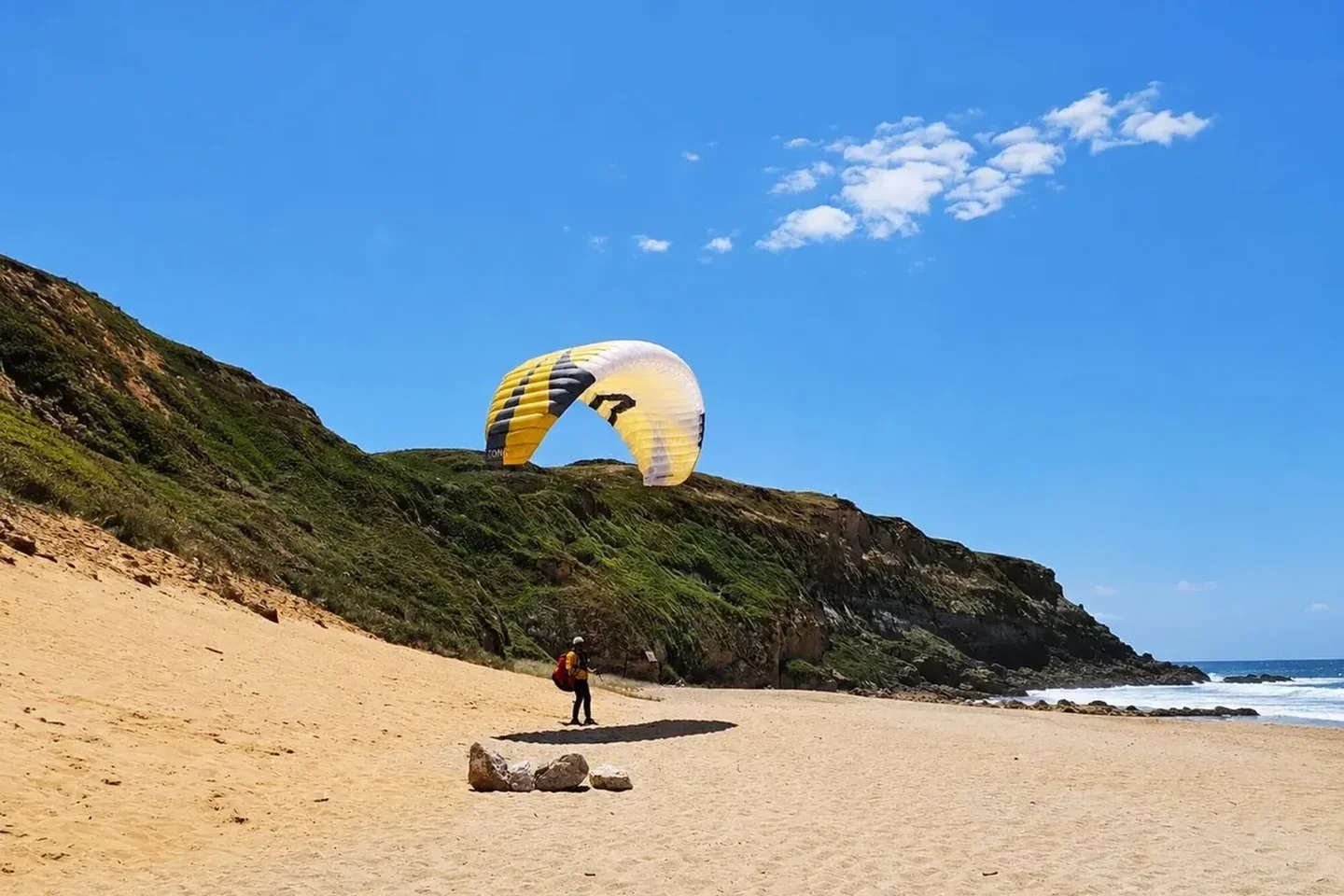
The Ground-Handling Week is seven days of focused wing mastery on the coastal dunes, beach grass and Atlantic launches of the Sesimbra region. Ground-handling is the most under-practised skill in paragliding — and the skill that unlocks everything else. Behrooz runs this programme for one reason: pilots who can read their wing on the ground make better decisions in the air, handle turbulence more calmly, and land more precisely on more difficult sites.
Each day you work in real Atlantic wind conditions — variable, gusty, cross-wind, occasionally strong — not a sheltered car park. You'll practice on different terrain across the week: open dune faces, beach grass, sloped launches, crossed-wind sites. The focus shifts with your level and what the wind is doing: reverse inflation, cobra starts, kite control in strong winds, controlled cross-wind inflation, and reading exactly what the wing is telling you before you commit to a launch.
Sessions typically run four to six hours of active practice per day, with natural breaks built in — ground-handling in Atlantic wind is physically demanding. At the end of each day, Behrooz reviews the session on video with you. You watch your technique, understand what changed between your first and last inflation, and set a clear focus for the following morning. The group is a maximum of 6 pilots. If you plan to do the Coastal Soaring Week or an XC programme next year, a ground-handling week first changes everything about how those programmes feel.
Sesimbra's Atlantic coastline provides one of the finest paragliding ground handling environments in Europe. Portugal's prevailing north-westerly trade wind delivers a steady, predictable training medium across the coastal dunes and grassy launches of the Setúbal Peninsula — consistent enough to allow serious repetition, variable enough to teach pilots exactly how a wing behaves under real Atlantic wind loading. The dunes at Costa Caparica and the beach sites at Praia das Bicas offer unobstructed run-ins, safe landing areas and sufficient wind range to progress from forward launches through full cobra starts across the week.
What's included
- Daily technique plan & session structure
- Video review of every inflation session
- Reverse, cobra and kite control coaching
- Real Atlantic wind on varied coastal terrain
- Cross-wind & strong-wind practice days
- Private transfer to every site, daily
- Video & photos of your sessions
- Personalised technique notes to take home
- Progressive difficulty across the week
- Bad-weather theory & indoor sessions if needed
Before you come
A few things to prepare before you travel — so you can make the most of every session from day one.
Licence & documentation
Bring your national licence or IPPI card. Even for ground-handling sessions, Behrooz keeps a record of every participant's qualification level.
Your own glider
Bring a glider you're familiar with — ground handling on an unknown wing wastes time. If you don't have a glider yet, let Behrooz know in advance and he'll sort a loan wing for the week.
Glider condition
Check your glider's lines and fabric before you travel. Ground-handling stresses lines differently to flight — worn lines on the dunes can fray quickly. A visual check is enough; a full check if it's been more than a season.
Physical prep
Ground-handling sessions are more physical than flying — sustained kiting on Atlantic dunes in light wind is tiring work. Some light core and shoulder conditioning before you arrive will make the week noticeably more productive.
What to wear
Comfortable, flexible clothing you don't mind getting sandy. Sturdy trainers or light hiking shoes — the dune sessions involve a lot of walking. Sunscreen and sunglasses are essential; the Atlantic light is strong even in spring.
Getting here
Fly into Lisbon (LIS) — Sesimbra is 45 minutes away. Behrooz can arrange an airport transfer if you need one; ask when you confirm your dates and he'll sort it.
What experience level is this ground handling course suitable for?
All licence levels are welcome — from student pilots building a solid foundation to experienced pilots correcting ingrained inflation habits. The course is especially valuable for mountain or inland pilots moving to coastal flying in Portugal, and for anyone who has had a layoff and wants to rebuild confidence before flying again.
Will I actually fly during the ground handling week?
The focus is on wing mastery on the ground. In the right conditions, some controlled dune soaring or short coastal flights may be included — but only when Behrooz is satisfied your kite control justifies it. The ground handling week is not a flying course: it's the course that makes you a better pilot in the air.
What equipment do I need to bring to Portugal?
Your own wing, harness, helmet and reserve. Behrooz provides all instruction and site knowledge. If you're considering upgrading your wing before the course, message him first — he can advise on what suits coastal conditions in Portugal and your current level.
What specific skills will the week develop?
Cobra launch, reverse inflation, precision directional control, harness entry under the wing and kite management across a range of coastal wind strengths. By the end of the week, your inflation and pre-launch handling should be consistent and automatic — the kind of control that directly reduces risk every time you fly.
Is transport to the training sites included?
Yes — daily private transfer from your accommodation to the training site and back is included. The best ground-handling terrain around Sesimbra spans several coastal locations, and Behrooz plans the most suitable site based on the forecast and adapts if conditions shift. No car is needed.
How does payment work?
Payment is made directly to Behrooz — no booking platforms, no agencies, no middlemen. No deposit is required to reserve your place; a WhatsApp message or email locks it in. Payment details are sent once your reservation is confirmed.
What is the cancellation policy?
Free cancellation on all programmes. If you've already paid ahead of your tour, cancellation is free of charge in full — nothing is deducted. Just send a WhatsApp message or email and Behrooz will take care of it personally.
What happens if the weather doesn't cooperate?
Behrooz knows every flying site in Portugal and always has a backup plan — if one site is out, we move to wherever is flyable. On any day nothing can be trained, you're not charged the full rate, only reasonable administrative or transport costs. Because of this, payment is handled flexibly: depending on the week, Behrooz may take payment before or after the tour, so you only ever pay for the days you actually trained.